Service Details
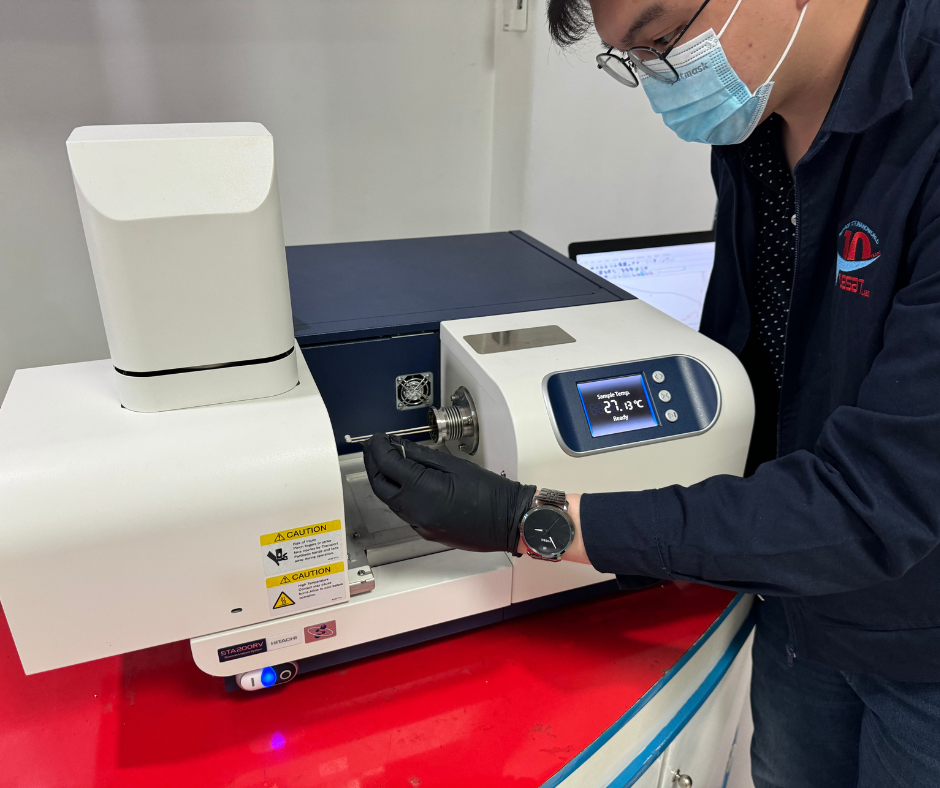
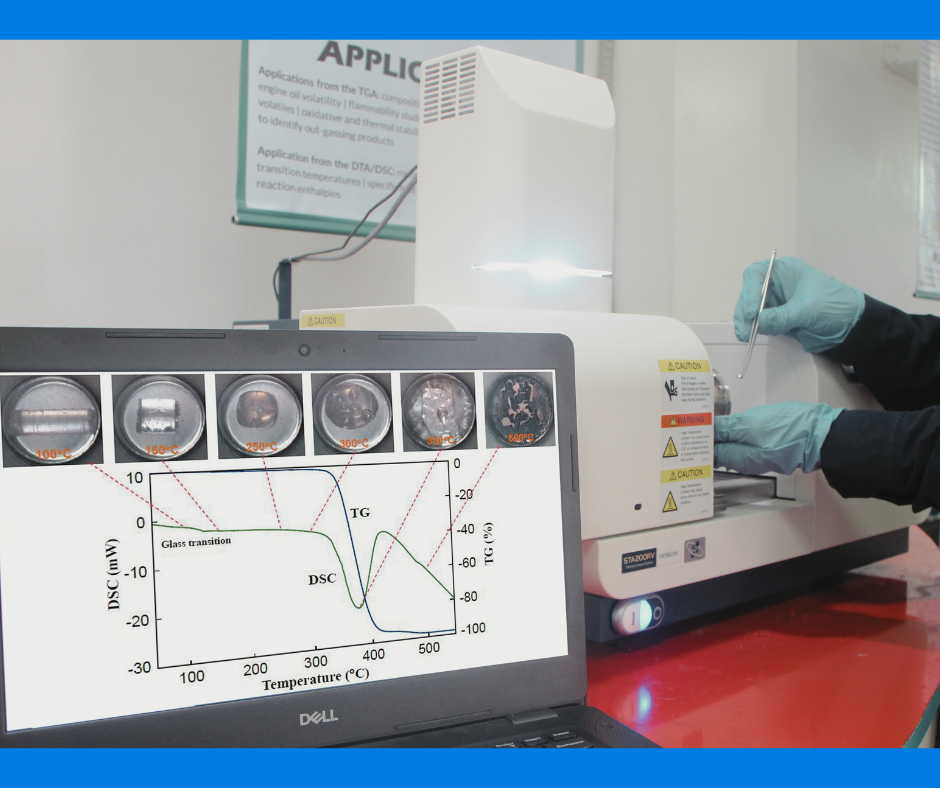
Differential Scanning Calorimetry / DSC Analysis is a thermal analysis technique used to evaluate how a material responds to changes in temperature. It measures heat flow as a sample is heated, cooled, or held at a controlled temperature, helping identify important thermal transitions such as glass transition, melting, crystallization, and curing behavior.
DSC is commonly used for polymers, plastics, resins, composites, pharmaceuticals, food materials, and other advanced materials. It supports material characterization, quality control, failure analysis, product development, and process evaluation by providing useful information about thermal stability, material consistency, and performance under temperature changes.
Common Applications
- Polymers & Plastics – Determination of glass transition, melting point, crystallization behavior, and degree of crystallinity
- Resins, Adhesives & Composites – Evaluation of curing behavior, reaction changes, and thermal performance
- Pharmaceuticals – Analysis of melting behavior, purity, polymorphism, and formulation compatibility
- Food & Packaging Materials – Evaluation of melting behavior, thermal stability, and material consistency
- Materials Science – Characterization of phase transitions, heat flow behavior, and thermal properties
- Quality Control – Comparison of raw materials, finished products, and batch-to-batch consistency
- Failure Analysis & R&D – Investigation of material changes, processing effects, and performance-related thermal behavior
- and more